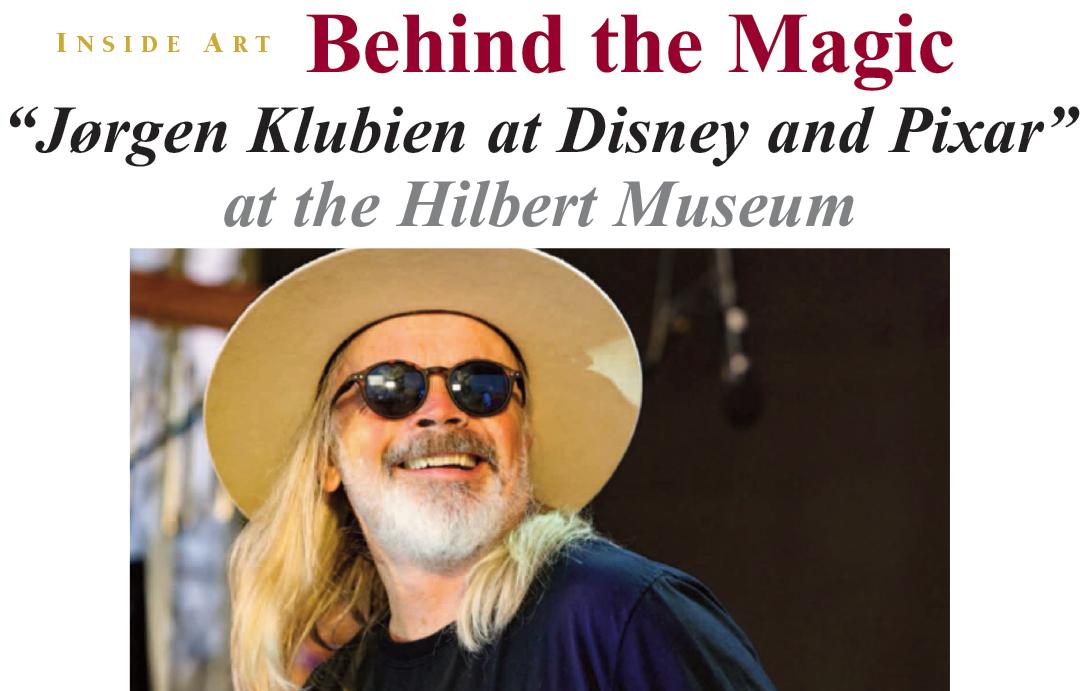
Behind the Magic with Jørgen Klubien
Visitors to the Hilbert Museum of California Art this summer and fall can step behind the screen and into the creative heart of some of the most beloved animated films of the last four decades. The museum’s current exhibition Jørgen Klubien at Disney and Pixar (on view through November 1) offers a rare look at the original drawings, storyboards and character studies of one of modern animation’s most influential—and often least publicly recognized—artists.
Born and raised in Denmark, Jørgen Klubien helped shape the visual storytelling behind an extraordinary list of modern classics: “The Little Mermaid,” “The Lion King,” “The Nightmare Before Christmas,” “Pocahontas,” “Mulan,” “A Bug’s Life,” “Toy Story 2,” “Monsters, Inc.” and “Cars,” for the latter of which he was also co-creator and screenwriter.
His work may not always have appeared on screen exactly as drawn, but it formed the essential blueprint for the stories audiences know by heart.
“Animation begins long before the finished film,” says exhibition curator Mary Platt, Director of the Hilbert Museum. “It starts with artists like Jørgen, whose quick, expressive drawings define emotion, movement, humor and dramatic tension before a single frame is animated.”
 - - - -
One of the exhibition’s most dramatic highlights fills an entire gallery wall: Klubien’s complete original storyboard for the song “Be Prepared” from Disney’s original animated feature “The Lion King” (1994).
As the character animator responsible for the nefarious Scar and the hyenas, Klubien created the visual storytelling for every beat of the villain’s iconic musical number. Displayed together to the public for the first time in this way, the storyboard reveals how the famous sequence was built panel by panel, from Scar’s sly manipulation to the darkly theatrical march of the hyena army.
It is a remarkable chance to see one of Disney’s most memorable scenes in its rawest creative form.
The exhibition also explores Klubien’s role during the great Disney animation renaissance of the late 1980s and 1990s, as well as his important work at Pixar during its formative years.
 - - - -
His collaboration with director John Lasseter helped inspire the original concept for “Cars,” drawing on Klubien’s fascination with American road culture and the idea that machines can seem to carry human personality. The result became one of Pixar’s most successful and enduring franchises.
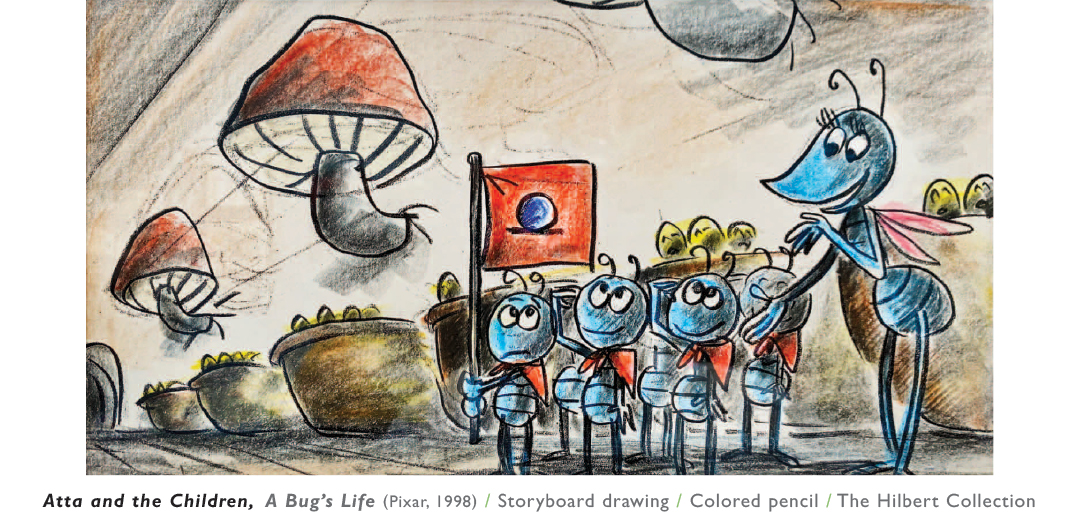
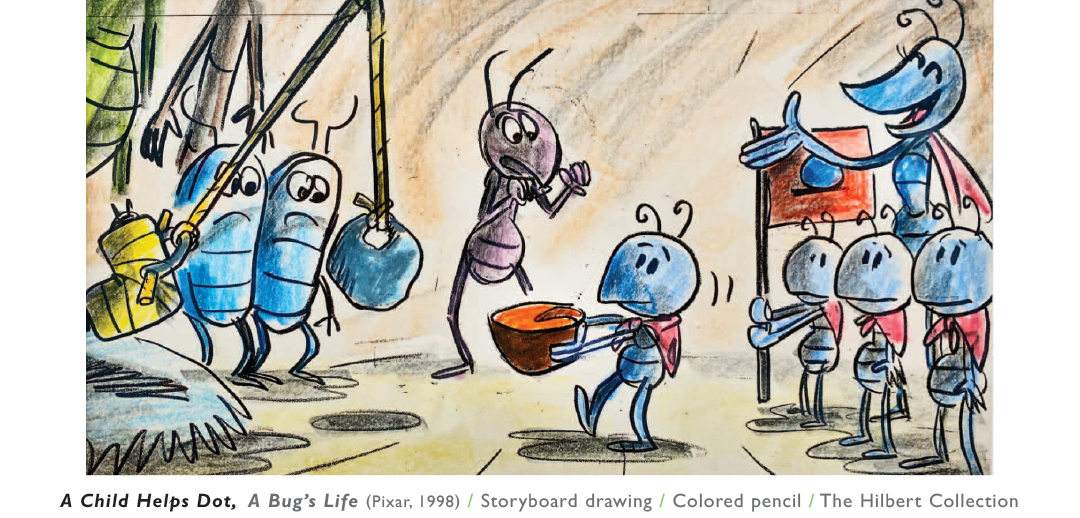
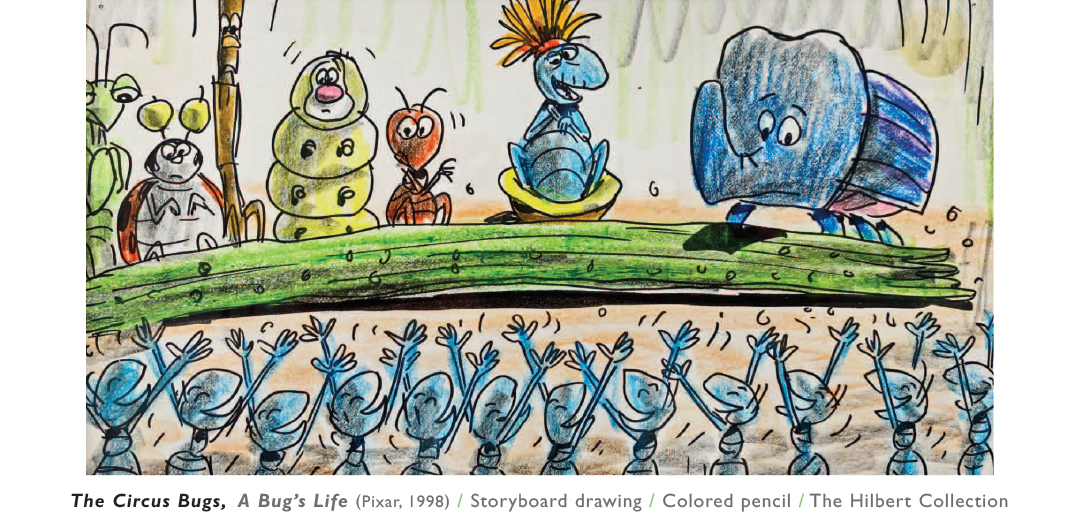
What makes the exhibition especially compelling is that these works were never intended as finished art. They were working tools—fast, energetic sketches used to communicate ideas among writers, directors, designers and animators. Yet seen today, they possess a striking artistic power of their own. You can see an example of this on the inside front cover, where three of Klubien’s storyboard drawings are displayed.
“Loose pencil lines suddenly become emotion,” says Platt, a longtime admirer of animation sketches. “A few gestures suggest an entire personality. A simple storyboard frame reveals the architecture of a scene millions of people have watched without ever considering how it began.”
The majority of the works in the exhibition come from the personal collection of museum Founder Mark Hilbert, whose holdings of Disney and animation art are some of the museum’s most distinctive strengths.
 - - - -
“Klubien is one of those rare artists whose work shaped the movies we all love, even if most people don’t know his name,” says Hilbert. “I’ve collected his work because his drawings show where the magic really begins—not with computers, but with pencil on paper, imagination and storytelling. To be able to share that process with our visitors here at the museum is tremendously exciting for me. This museum was built to celebrate outstanding narrative art, and Jørgen’s work absolutely belongs in that conversation.”
Additional works are on loan directly from Klubien himself, offering visitors an unusually intimate view into the artist’s creative process.
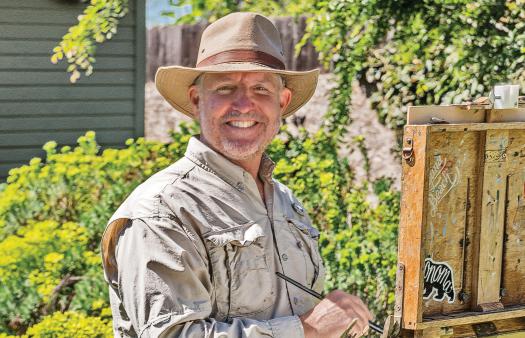
Klubien, who is also a celebrated pop musician in Denmark, divides his time between his home in Glendale and his native country as he continues to work in music, film, illustration, writing and directing.
But his legacy in animation remains. For anyone who grew up with these films—or for anyone curious about how great animated stories are born—this exhibition offers a fascinating chance to see the imagination behind the magic.
- - - -
The Hilbert Museum of California Art at Chapman University is open to the public Wednesday-Sunday, 10 am to 5 pm. Admission is free. The museum is located at 167 North Atchison St. in Old Towne, across from the train station. Free parking in the Metrolink-City of Orange structure one block east. More information: www.HilbertMuseum.org