What if a rock could change the way you see a painting?
That’s the quiet invitation at the Hilbert Museum of California Art’s new exhibition Stone and Scene, curated by artist and Chapman University emeritus professor Richard Turner. The show, which runs through October 4, pairs something rarely seen in a museum setting—ancient-style “viewing stones” with beloved California paintings from The Hilbert Collection. The result is unexpectedly powerful.
Viewing stones, sometimes called scholar’s stones, have been collected and contemplated in Asia for centuries. In China and Japan, naturally formed stones with evocative shapes are displayed indoors as objects of meditation and reflection. A stone might resemble a mountain peak, a distant island, a desert outcrop or even an animal. The point is not what the stone literally is, but what it suggests.
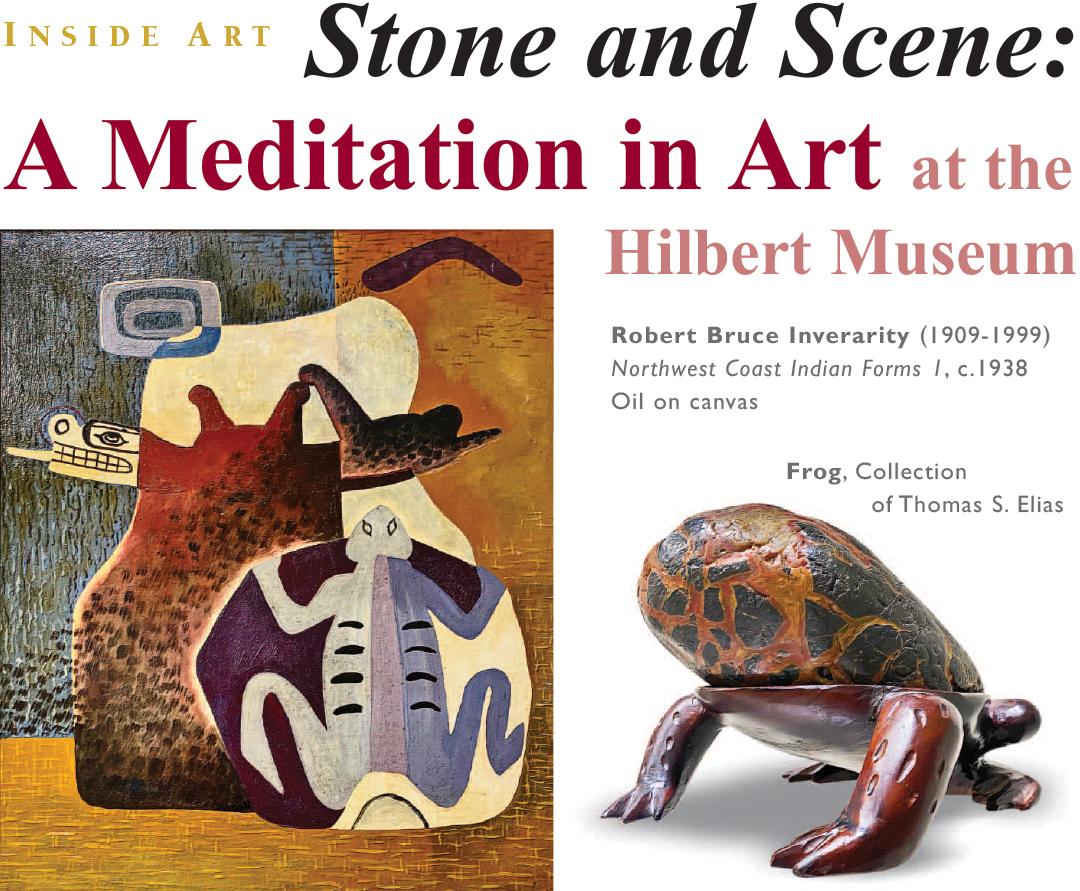
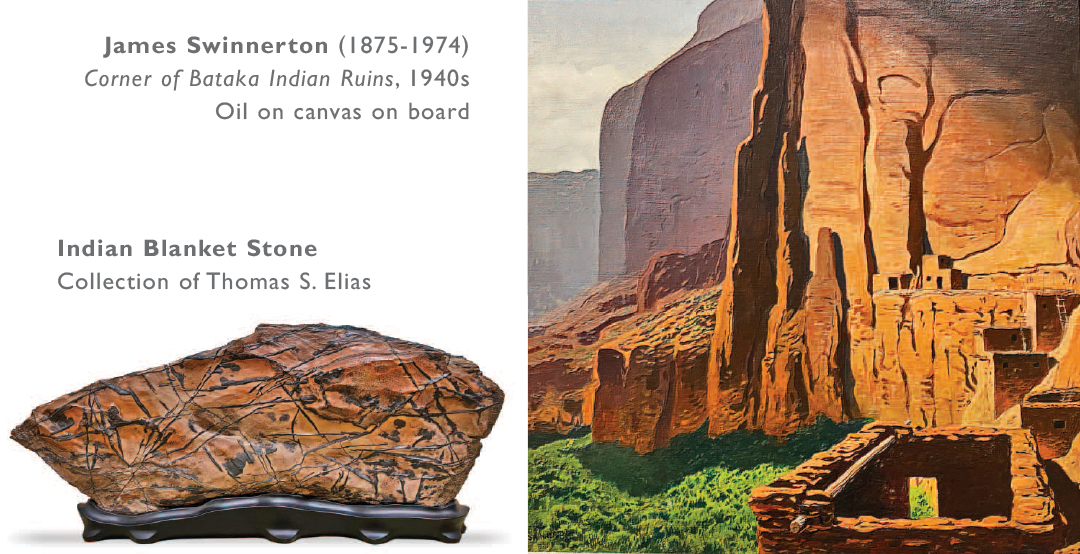
With this in mind, Turner saw an opportunity. “This is the first exhibition that has ever paired viewing stones with paintings from a museum collection,” he explains. “You’ll see similarities in form, composition and color. Some stones resemble the mountain ranges depicted in a painting’s California landscape; others might call to mind a desert scene or tumbled rocks on a Pacific shore. Some even resemble living creatures like frogs or lizards.”
The stones in the exhibition are on loan from private collectors throughout Southern California. Each has been carefully selected and positioned beside paintings from the Hilbert Museum’s collection of California Scene art. Sometimes the pairing feels obvious—a rugged stone echoing a craggy Sierra peak. Other times it raises questions, inviting visitors to decide for themselves why the two objects share space.
And that questioning is intentional.
“Some of the arrangements acknowledge shared similarities,” Turner says. “Others pose questions about the reasons for their juxtaposition.”
- - - -
- - - -
The installation itself breaks from standard museum practice. There are no individual wall labels beside each artwork. Instead, paintings are identified in a printed key on a table in the gallery. Turner designed the space to feel less like a formal museum and more like a thoughtfully arranged home.
“It’s meant to be experienced as if you were in someone’s living room,” says Mary Platt, Director of the Hilbert Museum. “We want visitors to slow down. To look. To notice connections they might otherwise miss. It’s a different kind of museum experience—quieter, more reflective and very personal.”
At the heart of the exhibition is a full-sized tokonoma, an architectural alcove traditionally found in Japanese homes. In Japan, the tokonoma is used to display seasonal arrangements—perhaps a bonsai, an ikebana flower composition, a viewing stone and a hanging scroll. The objects are carefully chosen to harmonize in theme and feeling.
The tokonoma in Stone and Scene is on loan from The Huntington Library, Art Museum, and Botanical Gardens, adding a rare architectural element to the exhibition. Nearby paintings from The Hilbert Collection create a subtle dialogue between Eastern display traditions and Western compositional techniques.
Turner points out that the principles are not so different. Balance. Negative space. Contrast. Harmony. Whether arranging flowers and stones in a tokonoma or composing a still life painting in California, artists are solving similar visual puzzles.
For Mark Hilbert, Founder of the museum and steward of one of the nation’s most significant collections of California art, the exhibition opens a fresh perspective on familiar works.
- - - -
- - - -
“One of the joys of collecting,” Hilbert says, “is discovering new ways to look at art you thought you already knew. These stones encourage us to see our California landscapes differently —to appreciate their forms, their silhouettes, their quiet strength. It’s a reminder that art isn’t only something we hang on a wall. It’s something we live with.”
That idea—living with art—is central to the show’s spirit. Historically, viewing stones were not museum objects. They were personal companions, placed on desks or tables where scholars would contemplate them while writing or thinking. Over time, the stones’ subtle shapes and textures revealed ever-changing landscapes in the viewer’s imagination.
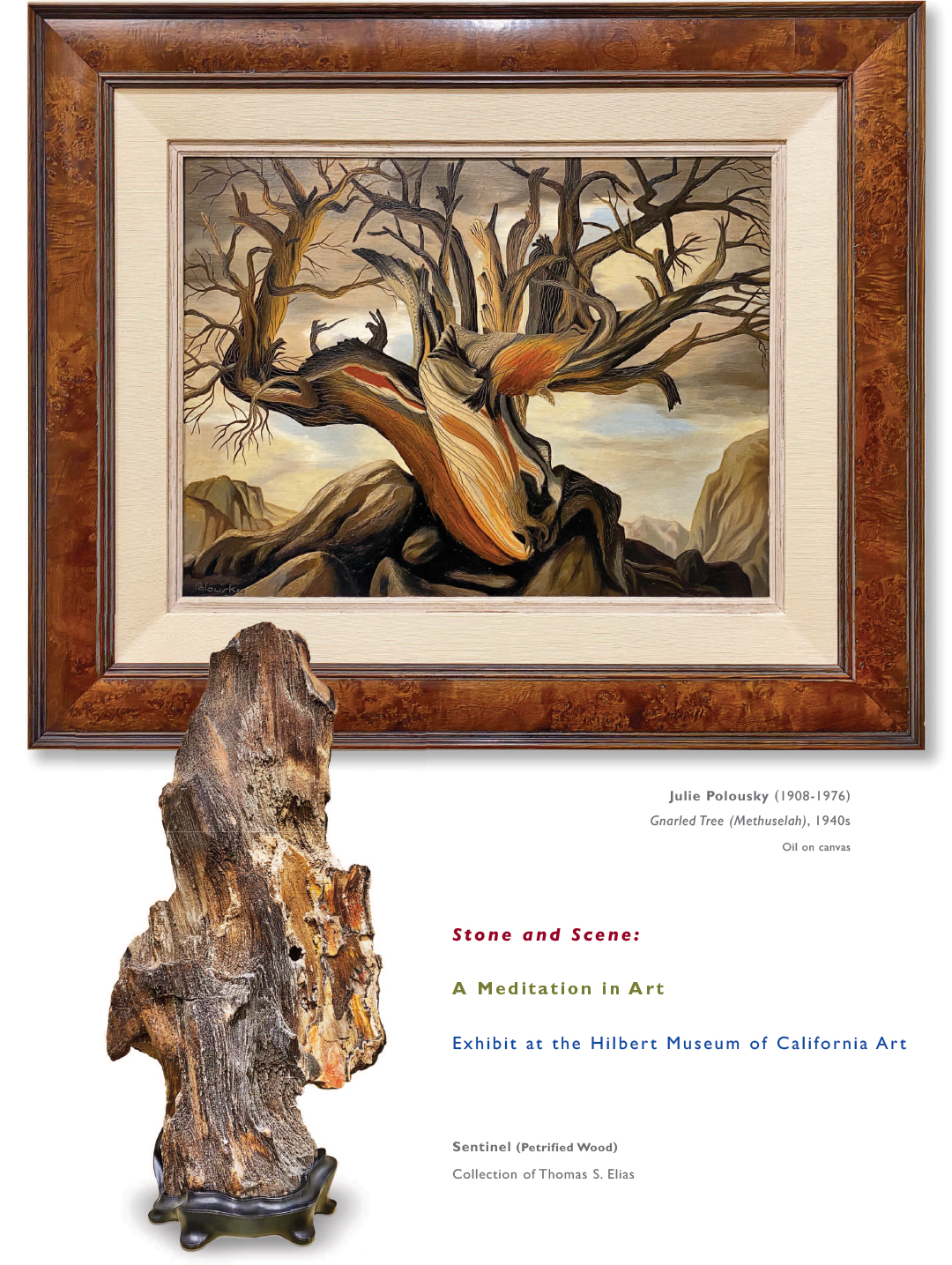
By placing these stones beside California Scene paintings—works that themselves celebrate mountains, deserts, coastlines and rural life—Turner creates a bridge between cultures and centuries. A small stone might echo the curve of a coastal bluff in a Phil Dike painting. A jagged fragment might mirror the drama of a desert scene. An imposing stone, or petrified wood, eroded by time, could echo the majesty of a centuries-old tree, such as the Gnarled Tree (Methuselah) painting pictured on the inside front cover. Visitors may begin noticing shapes in paintings that they previously overlooked.
Platt believes the exhibition offers something especially meaningful in today’s fast-paced world. “We’re used to rushing through galleries,” she says. “This show invites you to slow down. Spend time with a single pairing. Let your imagination engage. There’s something very grounding about that.”
Stone and Scene also reflects the Hilbert Museum’s broader mission: to present California art in ways that are accessible, surprising, and deeply human. Rather than approaching art as something distant or academic, the museum continues to frame it as part of everyday life
Visitors may arrive curious about unusual rocks. They may leave thinking differently about landscape painting, and perhaps about the objects in their own homes. Because sometimes, all it takes is a stone to shift your perspective.
- - - -
The Hilbert Museum of California Art at Chapman University is open to the public Wednesday-Sunday, 10 am to 5 pm. Admission is free. The museum is located at 167 North Atchison St. in Old Towne, across from the train station. Free parking in the Metrolink-City of Orange structure one block east. More information: www.HilbertMuseum.org